
Date : April 28, 2026
Category: Recovery & Wellness
Ice Bath vs. Cold Plunge: What Is the Core Difference and Which One Should You Use?
Almost every article comparing an ice bath vs. a cold plunge comes from someone selling a cold plunge system. That means the conclusion is decided before the first word is written. Cold plunge wins. Every time. Regardless of your situation. That is not a comparison. That is a sales page with a comparison-shaped header. The honest answer is that neither
Almost every article comparing an ice bath vs. a cold plunge comes from someone selling a cold plunge system. That means the conclusion is decided before the first word is written. Cold plunge wins. Every time. Regardless of your situation.
That is not a comparison. That is a sales page with a comparison-shaped header.
The honest answer is that neither method is universally better. Which one works best depends on your goal, how often you plan to use it, and what your budget really is.
This guide covers all three without recommending a product at the end. If you want to explore the full picture of cold therapy, the cold plunge guide hub website is a good starting point.
What Is an Ice Bath and What Is a Cold Plunge: Cleared Up Simply
The two terms get used interchangeably online. They are not the same thing.
Ice Bath
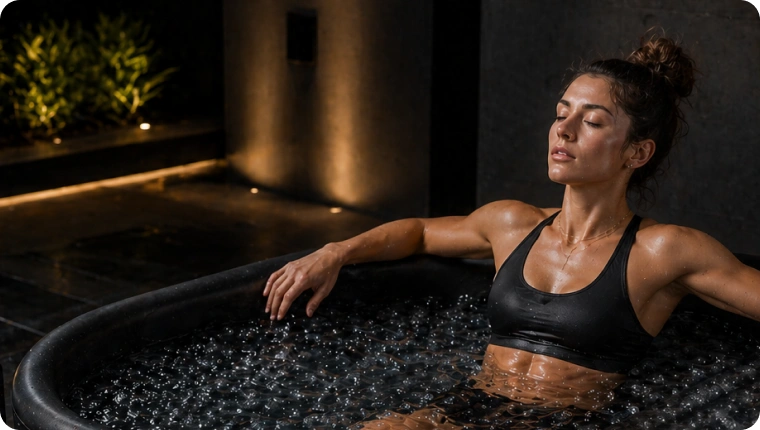
An ice bath is any setup where you add ice to water to lower the temperature. A bathtub, a stock tank, and an inflatable barrel. You fill it with water, dump in bags of ice, and get in.
There is no temperature control. The water starts cold and warms up as the ice melts. Every session is different. You need fresh ice each time.
Cold Plunge
A cold plunge is a dedicated system with a built-in chiller. You set a target temperature, and the chiller holds it automatically. The water is filtered, the temperature is consistent, and it is ready whenever you are.
Here, the difference is between a controlled protocol and a rough approximation of one.
Temperature Is Where Ice Baths and Cold Plunges Truly Differ
Most guides get this backwards. They say ice baths are colder. That is only partially true and only at the start of a session.
An ice bath can begin at 33 to 40°F when fully loaded with ice. That is colder than most cold plunge systems. But within 10 to 15 minutes, that temperature has climbed 10 to 20°F as ice melts. A session that started brutally cold ends at a temperature that barely qualifies as cold therapy.
A cold plunge temperature sits at whatever you set, typically between 39 and 55°F, and it stays there. The session you do today is the same as the one you do next week.
That consistency has significance physiologically. The body adapts more effectively to repeatable cold exposure than to variable temperatures. Inconsistent stimuli produce inconsistent adaptation.
| Factor | Ice Bath | Cold Plunge System |
| Starting temp | 33 to 40°F (fully iced) | 39 to 55°F (user-set) |
| Temperature stability | Rises 10 to 20°F as ice melts | Consistent throughout |
| Session-to-session consistency | Varies every time | Identical every time |
| Coldest achievable | Near freezing initially | 37 to 55°F by system spec |
| Prep required | Ice every session | None after initial setup |
Ice Bath vs Cold Plunge for Recovery: What Changes and What Does Not
Both methods trigger the same core physiological response. Cold water immersion causes vasoconstriction, spikes norepinephrine, and reduces inflammatory markers. The mechanism is the same whether the cold comes from ice or a chiller.
What changes is how well each method fits into a consistent protocol. And consistency is where most of the long-term recovery benefit actually lives.
Post-Workout Recovery
Cold water immersion within 30 minutes of intense training reduces delayed onset muscle soreness. This is well-documented in sports medicine research. An ice bath works here. So does a cold plunge system.
Where ice baths have a genuine edge: the initial colder temperatures can produce a stronger acute inflammatory response. For elite athletes recovering from competition, that sharper cold shock has real value. This is what no competitor article will tell you.
Building a Daily Habit
For regular practitioners plunging three to five times per week, the cold plunge system wins clearly. Consistent temperature means consistent adaptation. No ice logistics means the habit truly sticks.
The research on dopamine and norepinephrine elevation from cold exposure shows the benefits compound over time. That compounding requires consistency. Ice baths make consistency harder to maintain.
Timing Matters More Than Method
- Post-workout (within 30 min): Reduces inflammation and soreness. An ice bath or cold plunge both works here.
- Pre-workout: Sharpens focus and alertness but may reduce peak muscle activation. A cold shower or mild cold plunge is better here.
- Daily recovery habit: Cold plunge system wins on consistency and convenience.
- Occasional post-competition acute recovery: Ice bath initial temperatures can be more effective.
What Each Method Typically Costs Over a Year
The upfront cost is one number. Annual cost is the number that is crucial for anyone plunging regularly.
Ice Bath Annual Cost
The tub itself costs $0 if you use a bathtub or $100 to $300 for a stock tank or inflatable.
The ongoing ice bath cost is where it adds up. Forty pounds of ice per session, three sessions per week, at roughly $3 per 10 lbs, is around $150 per month. That is $1,800 per year. In warm climates or summer months, you need more ice, and the number rises.
Add 20 to 30 minutes of setup and cleanup per session. Over a year, at three sessions per week, that is over 75 hours spent managing ice.
Cold Plunge System Annual Cost
- Upfront: $1,500 to $6,000, depending on system.
- Running costs: $20 to $50 per month for electricity and $10 to $20 per month for water treatment and filter replacement.
- Total running cost: $30 to $70 per month after the upfront investment. Break-even against ice costs for a regular user typically falls within six to eighteen months.
| Cost Factor | Ice Bath (3x/week) | Cold Plunge System |
| Setup cost | $0 to $300 | $1,500 to $6,000 |
| Monthly running cost | $150 (ice only) | $30 to $70 |
| Annual running cost | ~$1,800 | ~$360 to $840 |
| Time per session (setup) | 20 to 30 minutes | Under 2 minutes |
| Break-even point | N/A | 6 to 18 months vs ice |
Which One Is Right for You: Based on Your Real-Life Situation
An ice bath is a Better Idea If
- You are testing cold therapy and are not ready to commit financially
- You train competitively and need maximum acute cold exposure occasionally after hard sessions
- You plunge fewer than twice a week, and the ice cost math still works in your favor
- Budget is a genuine constraint right now, and the habit is not yet established
Cold Plunge System is a Better Idea If
- You plan to plunge three or more times per week consistently
- Temperature control and a trackable protocol matter to your goals
- You want the habit to last without the friction of buying ice every session
- You have done the cost math, and the break-even timeline works for your usage
Complete Beginner
Start with a cold shower. Thirty to ninety seconds of cold at the end of your regular shower. It costs nothing. It builds the cold tolerance and mental habit before you invest in any equipment. Cold plunge for beginners should start here, not with a $3,000 system on day one.
A Brief Word on Cryotherapy
Cryotherapy comes up in almost every ice bath vs. cryotherapy or cold plunge discussion. It is worth a short answer.
Cryotherapy exposes the body to extremely cold, dry air, typically -160 to -220°F, for two to three minutes in a chamber. It is fast and requires no water.
The research consistently shows that water immersion produces a stronger physiological adaptation than dry cold air. The thermal conductivity of water is over 20 times higher than that of air. Your body loses heat and responds faster in water.
Cryotherapy also costs $50 to $100 per session at a facility. For anyone plunging regularly, the cost makes it impractical as a primary method. It works as an occasional supplement but not as a replacement for water immersion.
Ice Bath vs Cold Plunge: Neither Wins Universally
Here is the answer most guides will not give you: it depends, and the dependency is meaningful.
If you are building a daily or near-daily habit and consistency matters to your results, a cold plunge system is the better long-term investment. The math works out, the habit sticks, and the physiological results compound.
If you train competitively and want maximum acute cold exposure after occasional hard sessions, an ice bath delivers a colder initial stimulus at a fraction of the upfront cost.
If you have never done cold therapy before, start with a cold shower. Build from there. Ready to look at dedicated systems? The cold plunge buying guide covers what to check before spending. Or if you want to compare specific systems directly, the cold plunge systems breakdown has the full comparison.
Frequently Asked Questions
How long should you stay in a cold plunge or ice bath?
For recovery and general cold therapy, two to ten minutes is the effective range for most people. Research on cold water immersion benefits typically uses sessions in the three- to eight-minute range. Beginners should start at two minutes and build up. More time does not linearly increase benefit past a certain point.
What temperature should a cold plunge be?
Between 37 and 59°F is the range where cold-water immersion produces a measurable physiological response. Most regular users settle on between 38° and 50°, depending on their tolerance and goal. Below 37° carries increased risk and is not necessary for the benefits associated with regular cold therapy.
Is a cold plunge worth the cost over an ice bath?
For someone plunging three or more times per week, the annual equation typically favors the cold plunge system within 12 to 18 months. The upfront cost is higher, but the ongoing cost is substantially lower than buying ice regularly. For occasional users, the ice bath remains the more practical option.
RECENT BLOGS
How Often Should You Cold Plunge Per Week? What the Science Says
Aug. 05, 2026
What Temperature Should a Cold Plunge Be – A Free Guide?
Jul. 30, 2026
How Long Should You Cold Plunge? The Research-Backed Answer for Every Level
Jul. 29, 2026Cold Plunge Water Maintenance Guide: How to Keep It Clean, Safe, and Clear
Jun. 20, 2026
Cold Plunge and Mental Health: What the Research Shows for Stress, Anxiety, and Focus
Jun. 19, 2026Recent Blogs
How Often Should You Cold Plunge Per Week? What the Science Says
This is the most common confusion cold plunge users have. They always have to spend a lot of time deciding…
August 5, 2026
Read More
What Temperature Should a Cold Plunge Be – A Free Guide?
For most people, the sweet spot falls between 50°F (10°C) and 59°F (15°C). But where you land in that range…
July 30, 2026
Read More
How Long Should You Cold Plunge? The Research-Backed Answer for Every Level
Wondering how long you should actually stay in that cold water? So for most people, 2 to 5 minutes per…
July 29, 2026
Read More
Cold Plunge Water Maintenance Guide: How to Keep It Clean, Safe, and Clear
A cold plunge that is not maintained regularly becomes a hygiene problem within weeks. The water clouds up. The walls…
June 20, 2026
Read More
Cold Plunge and Mental Health: What the Research Shows for Stress, Anxiety, and Focus
Thousands of people get into ice-cold water each morning. Not because it feels like a relief. But because something shifts…
June 19, 2026
Read More
Cold Plunge for Muscle Recovery: What Actually Helps and What It Can’t Do
Today, cold plunges have become a standard part of recovery routines. Most of the athletes are using it for their…
June 16, 2026
Read More